Portland City Grill

I love the view of a city from up high. When I visit a city for the first time, I go to the highest vantage point to get an overview of how the city is arranged. It’s like a model of the city has been laid out all around you. You can investigate whatever you decide, either from your bird’s eye view or later, at ground level.

In Portland, one of the best places for a view from up high is the Portland City Grill. On the 30th floor of the U.S. Bancorp Tower, known to some as Big Pink, the City Grill has a commanding view of downtown Portland. During the day, you have a view of the Willamette river and several bridges, as well as the downtown buildings and the west hills. At night, instead of seeing the tops of roofs, you get to enjoy the night lights of downtown Portland (Hint: If you want to take a picture of the city lights at night, turn off your flash. Everyone will appreciate it).

The restaurant is a fine dining establishment, and sitting in the dining room makes a pricey date night event. My preference is to sit in the bar, where a drink and a bowl of soup are a budget dinner while I enjoy the view. The prime view from the bar is from the window seats. Low tables with benches on either side make sort of carrels where you can look out over a section of town, and the high tables in the bar area have decent views as well. If you don’t care as much about the view, there are booths against the walls and, of course, seating at the bar itself.

I visit the City Grill to make a great start to an evening on the town. Cocktails, nibbles and a great view of Portland, then off to other adventures.

Portland City Grill – 111 SW 5th Ave, Portland, OR 97204 – (503) 450-0030
portlandcitygrill.com

Hatch Chile Season

Lately, when I travel, I’ve gotten in the habit of texting my sister a photo of something with the caption, “guess where I am.” This usually stumps her. Once I sent her a photo of the exterior of the White Horse Tavern in Greenwich Village and her guess was, “Ummm… England?”

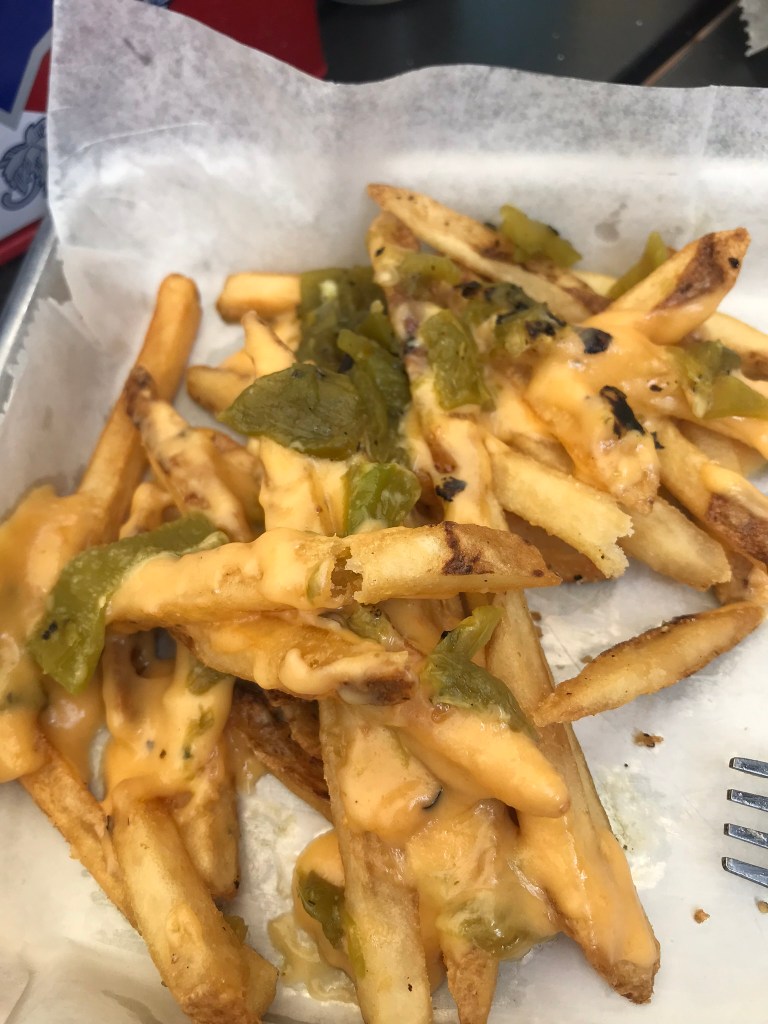
On a trip to New Mexico, I sent her the photo below with the usual guess-where-I-am caption and her instantaneous response was, what are you doing in New Mexico?

Chili Cheese Fries, New Mexico Style
The Burger Stand @ Burro Alley
207 W San Francisco Street
Santa Fe, NM 87501
(505) 395-8210

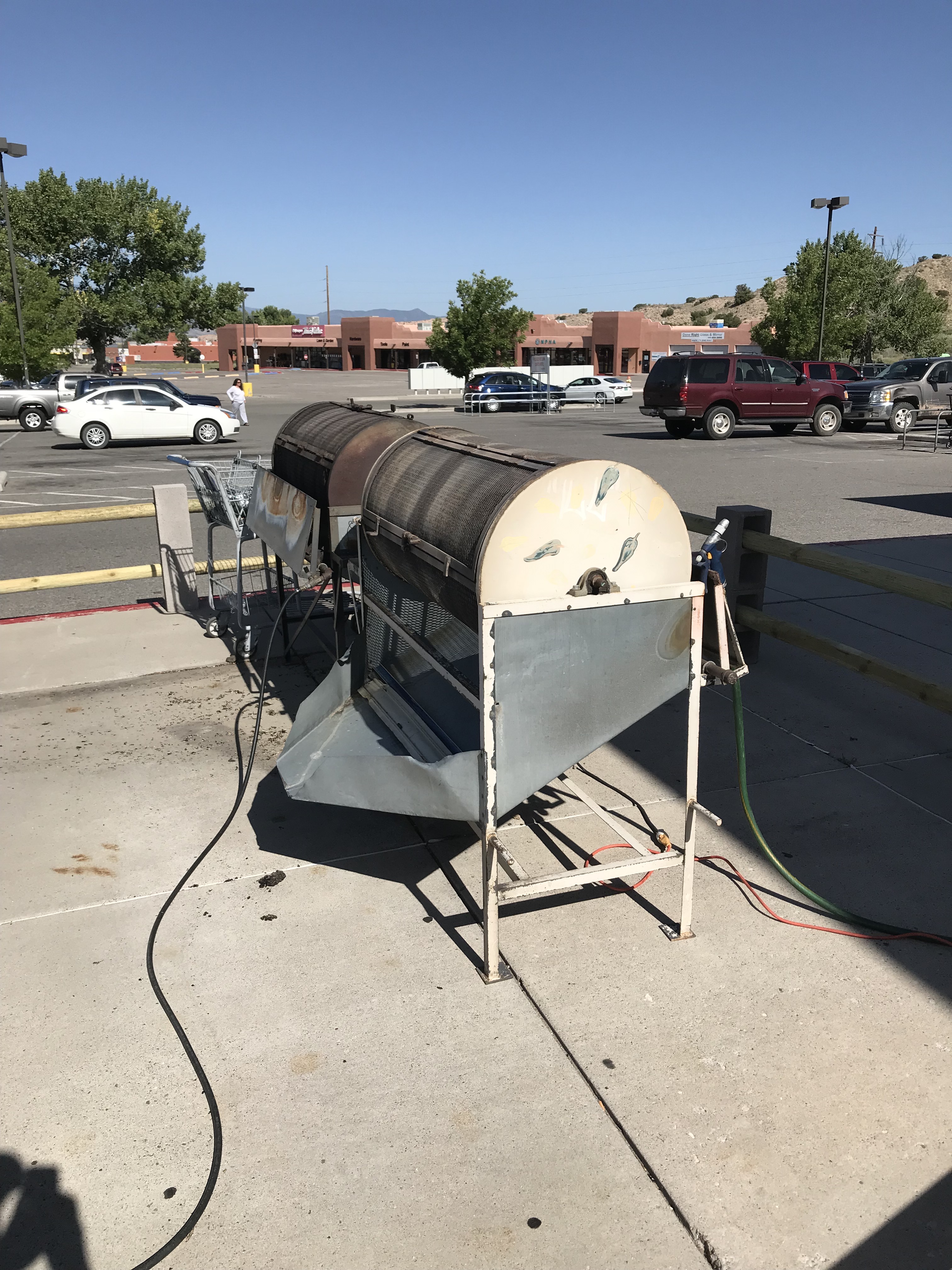
Hatch chiles are practically the state flower of New Mexico, and during the two months when they are fresh, it is almost impossible to go anywhere without the aroma of fresh-roasted green chiles. Even the grocery store was roasting fresh chiles.

My sister’s immediate connection of green chiles and New Mexico is because our parents met in New Mexico. Growing up elsewhere, we saw our father dump canned Ortega green chiles on almost everything. As a child, I never really understood my father’s penchant for doing this but, now that I have tasted the real thing, I get it. At the time, that was as close as he could get. Also, having had the real thing, I absolutely do not approve of the canned variety. Get them fresh, roasted locally, and enjoy them while the season lasts. Hatch chile season is typically August and September.

For those who are afraid of the spiciness of chiles, Hatch are not a particularly hot chile. Spicy, yes, but also sweet and the flavor of the fresh roasted green chile is wildly different than canned chiles. Go, and taste the real thing before you judge.

Muni Passport

One of the best ways to meet the locals is on public transportation. A friend of mine makes a point to always ride public transit when he travels, even if only once during his trip. He says you get a much better exposure to the local people by doing this.

I have started doing this and never regretted it. Granted, there are some circumstances when you do not want to be stuck on public transit, but the opportunity to be among the local people is one of the things I love about travel. During a trip to San Francisco, we purchased a three-day Muni Passport. This gives you unlimited rides on any of the Muni system transport: cable cars, buses and streetcars.

The cable cars bring out the kid in me. I remember riding the cable car when I was about six and the brakeman let me ride right up by the grip handle. The clang of the bell takes me right back to childhood. Needless to say, riding the cable cars, and riding them a lot, was high on my list for this visit to SF. Since cable car fare is $6 each way, $29 for the three-day passport was a bargain.

The passport also provided an easy way to get where we wanted to go in the city. We were renting a place where Chinatown meets Little Italy, which meant we were walking distance from a lot of the tourist attractions. Despite its hills, San Francisco is a very walkable city. Still, when time, temperature or energy levels made us want to not walk, the Muni was an easy way to get where we wanted to go and it gave us a way to meet new people. For example, we met a very nice lady on our way to the conservatory of flowers and spent part of the afternoon with her.

While riding, we saw restaurants to try, galleries to visit, shops to return to, and reflected on how much we miss when preoccupied with the act of self-transportation. By and large, the Muni system is well run, reasonably clean and safe, and a convenient way to move about San Francisco. Having said that, sometimes you do have a travel experience classified more as “adventure” than “enjoyment.” Our bus trip to the BART station on our last morning was one of these.

I am a proponent of flying early, because I think early flights are less likely to get delayed. This meant in the early hours of a Wednesday morning, we were boarding a bus to get ourselves and our luggage to the BART station to travel to the airport.

During our visit, as we walked around the city, we saw a large number of people digging through streetside recycle bins, looking for redeemable cans and bottles. It seemed that every single on of these people was elderly and Chinese. In saying this, I am not trying to stereotype. Remember, we were staying on the edge of Chinatown. Lots of the people we saw were Chinese: Shopkeepers, cops, bus drivers… it’s an ethnic community. However, as we walked through San Francisco, exploring and adventuring, there seemed to always be an elderly Chinese person picking out bottles and cans somewhere nearby.

We frequently saw the same people late at night and again in the morning when we headed out for coffee. On this last, very early, morning, we arrived at the bus stop and found a collection of these industrious recyclers. Each of them had a huge bag of recycling. These bags were easily the size of 55-gallon drums. One fellow had two giant bags, and a pole over his shoulder balancing the two bags while he walked.

When the bus stopped, the driver, also Chinese, limited how many of the recyclers could get on the bus at that stop. And at the next stop. And the next. After about five stops, the bus was absolutely crammed with recycling. At every stop after that, our driver started calling out, “No more recycling! No more recycling!” If you have ever been to a recycling center, you know the peculiar pungency unwashed soda cans produce en masse. It was a few days before my nose forgot the experience of that particular bus ride.

Nonetheless, this adventure was as much bemusing as it was stinky, and became one of my San Francisco stories. The Muni Passport was an excellent part of our trip to San Francisco.

https://www.sfmta.com/fares/3-day-visitor-passport
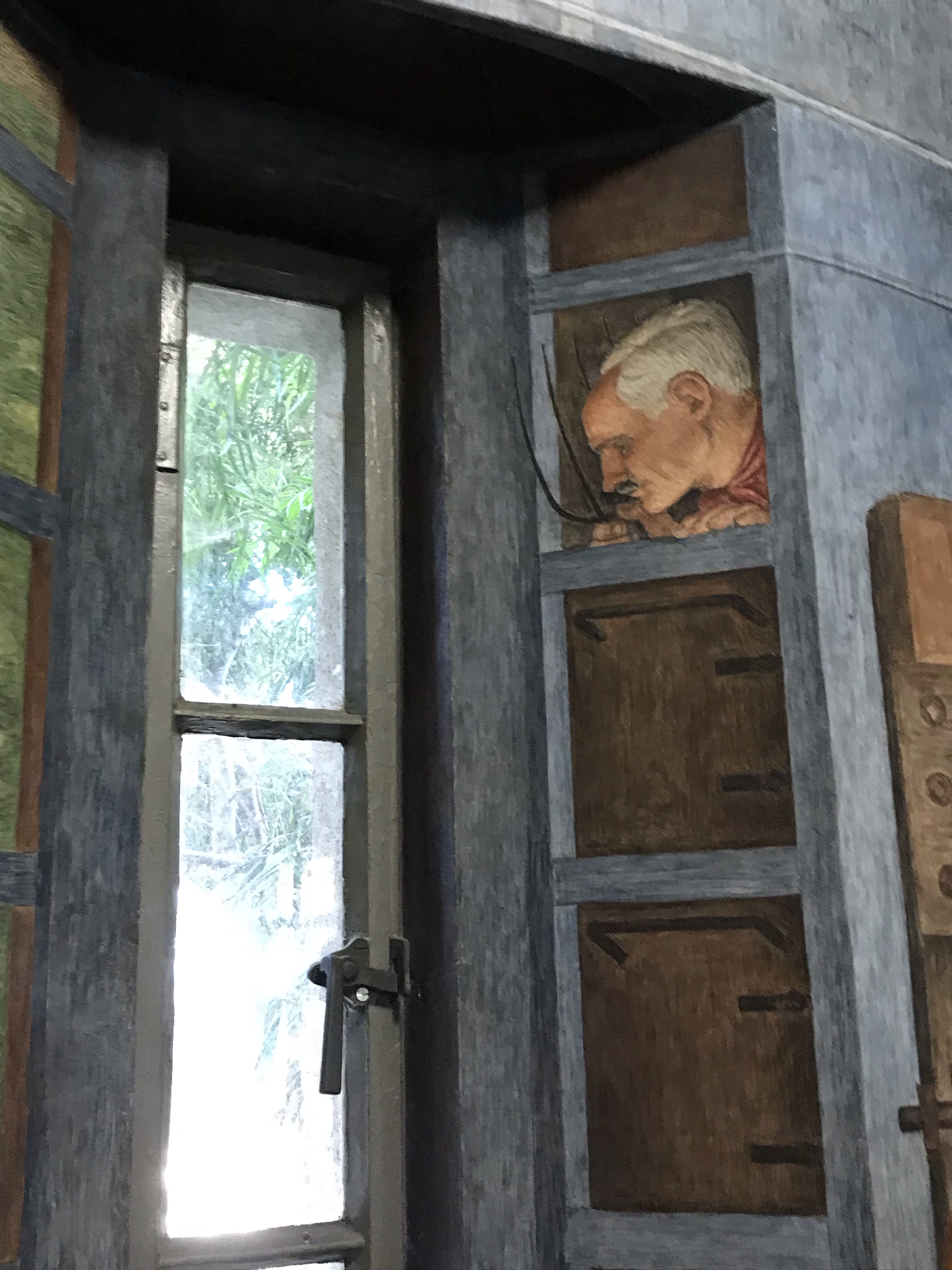
WPA Murals in the Coit Tower

The Coit Tower is another of those look-how-the-whole-city-is-just-laid-out-for-us-to-see places. But there is more to be seen than just the view of San Francisco. The murals inside the Coit Tower were created as part of the Federal Art Project under the auspices of the Works Progress Administration. While there is an admission charge and a wait to go up inside the tower, the murals are free to view inside the lobby ringing the ground floor.

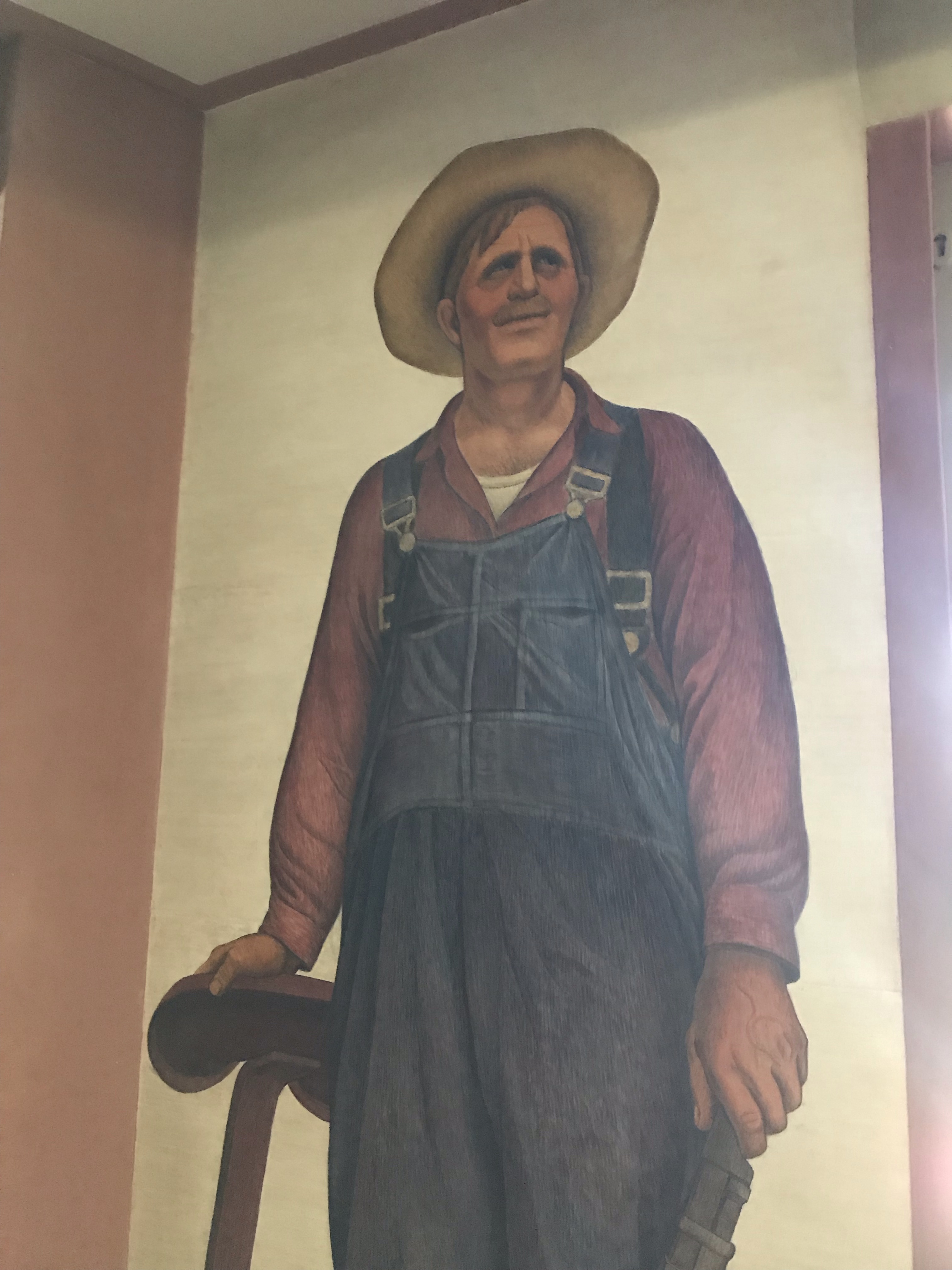
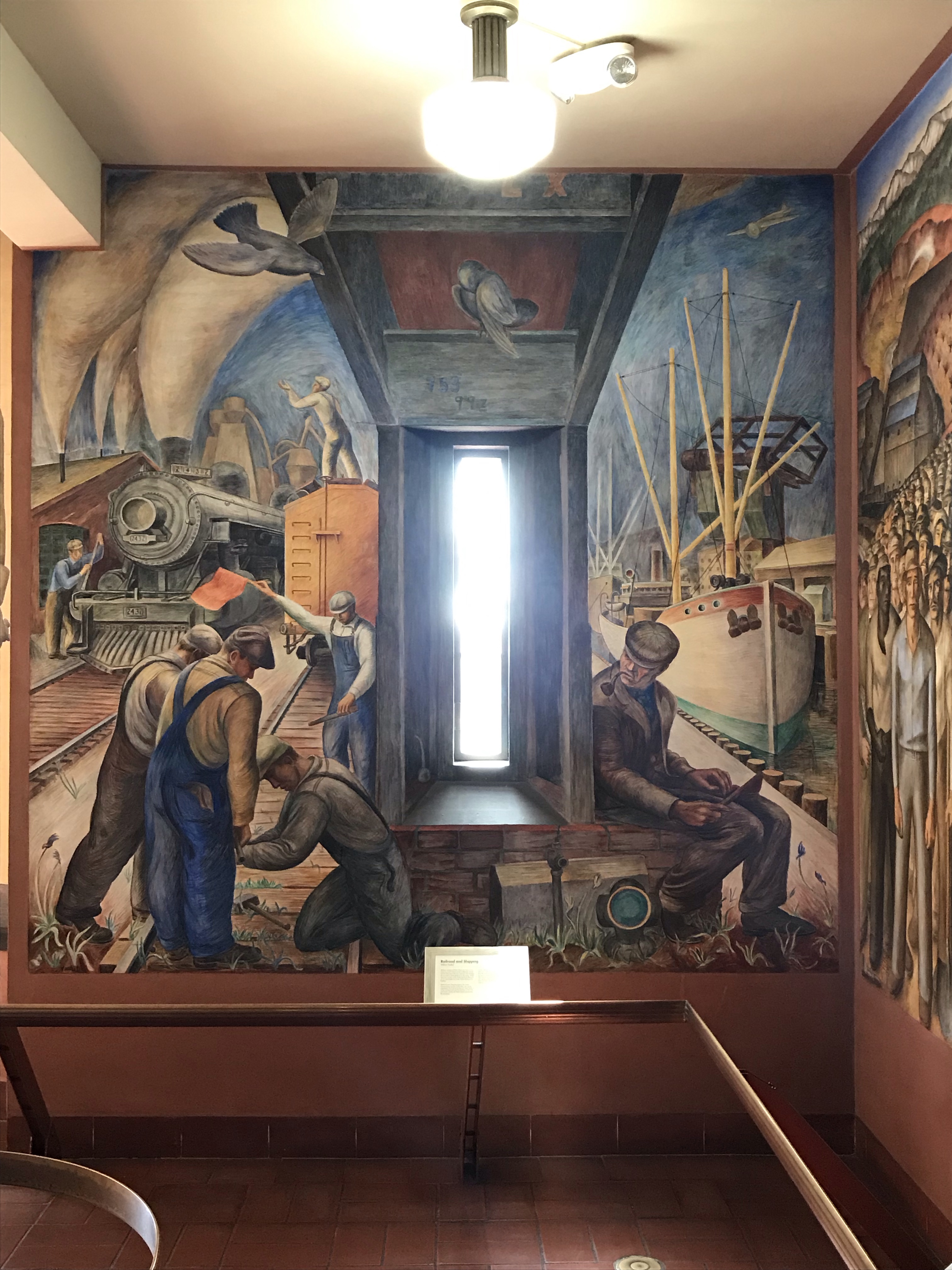
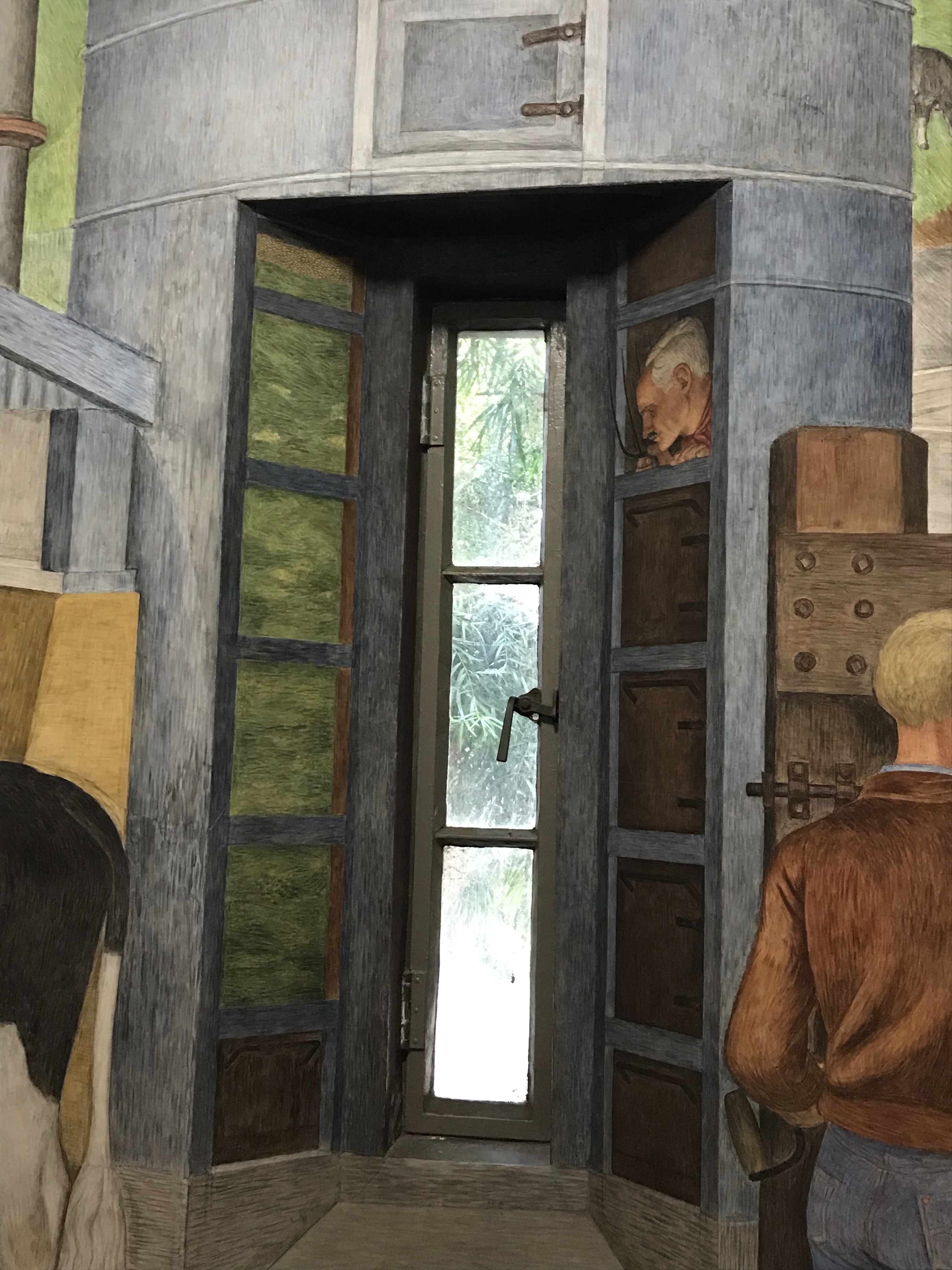
As near as I can tell, the murals were painted as frescoes, that is, on wet plaster. Some of the Coit Tower murals that caught my eye:

The Federal Art Project was an economic initiative, not a cultural one, but when I look at WPA murals in different locations, I see some significant similarities in tone and, to a lesser extent, in style. I think the tone is a result of the shifts caused by the great depression, when national pride intersected with a desire to rise to prosperity again. There were far more murals than I could do justice to in the Coit Tower, and the tone of most was hopeful, industrious and proud. Stylistic overlap in WPA murals I cannot explain except for influence within the artistic community of the time. Considering artists were scattered all across the country at a time when communication was slow and ponderous, this seems noteworthy to me.